
CAREERS ENCYCLOPEDIA

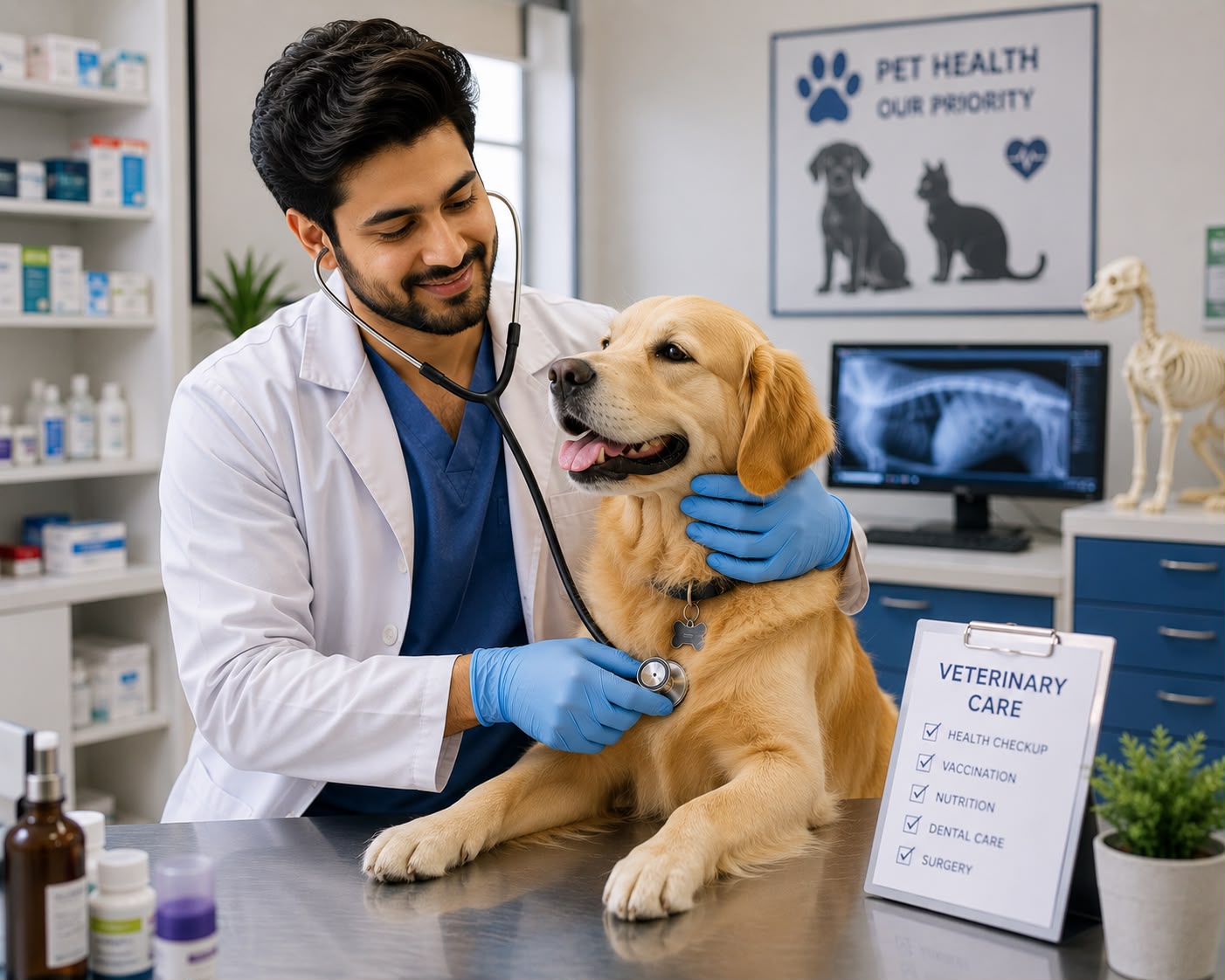
Veterinarian
A Veterinarian is a medical professional who diagnoses, treats, and prevents diseases and injuries in animals. They care for pets, livestock, and other animals while supporting animal health, welfare, and public health.
Career Cluster Tag:
On The Job You Would:
- Examine animals and diagnose illnesses and injuries
- Provide medicines, vaccinations, and treatments
- Perform surgeries and medical procedures
- Advise owners and farmers on animal care and nutrition
- Maintain medical records and monitor animal health
Knowledge
- Animal anatomy, physiology, and diseases
- Veterinary medicine and surgery
- Animal nutrition and preventive healthcare
- Infectious diseases and public health
Skills
- Animal examination and diagnosis
- Medical treatment and surgical skills
- Communication with animal owners
- Laboratory testing and medical documentation
Abilities
- Ability to handle and examine different animals safely
- Ability to diagnose health problems accurately
- Ability to make decisions in emergencies
- Ability to work in clinics, farms, and outdoor environments
Personality
- Compassionate and patient
- Responsible and observant
- Calm under pressure
- Caring and detail-oriented
Technology
- Veterinary diagnostic equipment
- Digital X-ray and ultrasound systems
- Laboratory testing equipment
- Veterinary practice management software
Entry Requirements
- Doctor of Veterinary Medicine (DVM) degree is generally required
- Admission normally requires completion of relevant intermediate-level science education
- Clinical training and practical experience are important
- Veterinary registration with the relevant authority is required to practice professionally
Job Outlook
Veterinarians can work in veterinary clinics, hospitals, farms, livestock organizations, research institutions, zoos, and government departments. Opportunities are supported by demand for animal healthcare, livestock production, food safety, and disease control.
Where can you work?
- Veterinary hospitals and clinics
- Livestock and dairy farms
- Poultry and animal production companies
- Government livestock and veterinary departments
- Zoos, animal shelters, and research organizations
Education
- Doctor of Veterinary Medicine (DVM)
- MS Veterinary Medicine
- MPhil in Veterinary Sciences
- PhD in Veterinary Sciences
Where can you study?
- University of Veterinary and Animal Sciences, Lahore
- University of Agriculture, Faisalabad
- University of Agriculture, Peshawar
- University of Veterinary and Animal Sciences, Jhang
- Sindh Agriculture University, Tandojam
- Lasbela University of Agriculture, Water and Marine Sciences
Expenses & Scholarships
DVM programs generally cost between Rs. 80,000 and Rs. 600,000 per year, depending on the institution. Additional expenses may include laboratory work, clinical training, equipment, and professional registration. Scholarships may be available through HEC, universities, and merit- or need-based programs.
Similar Occupations: