
CAREERS ENCYCLOPEDIA

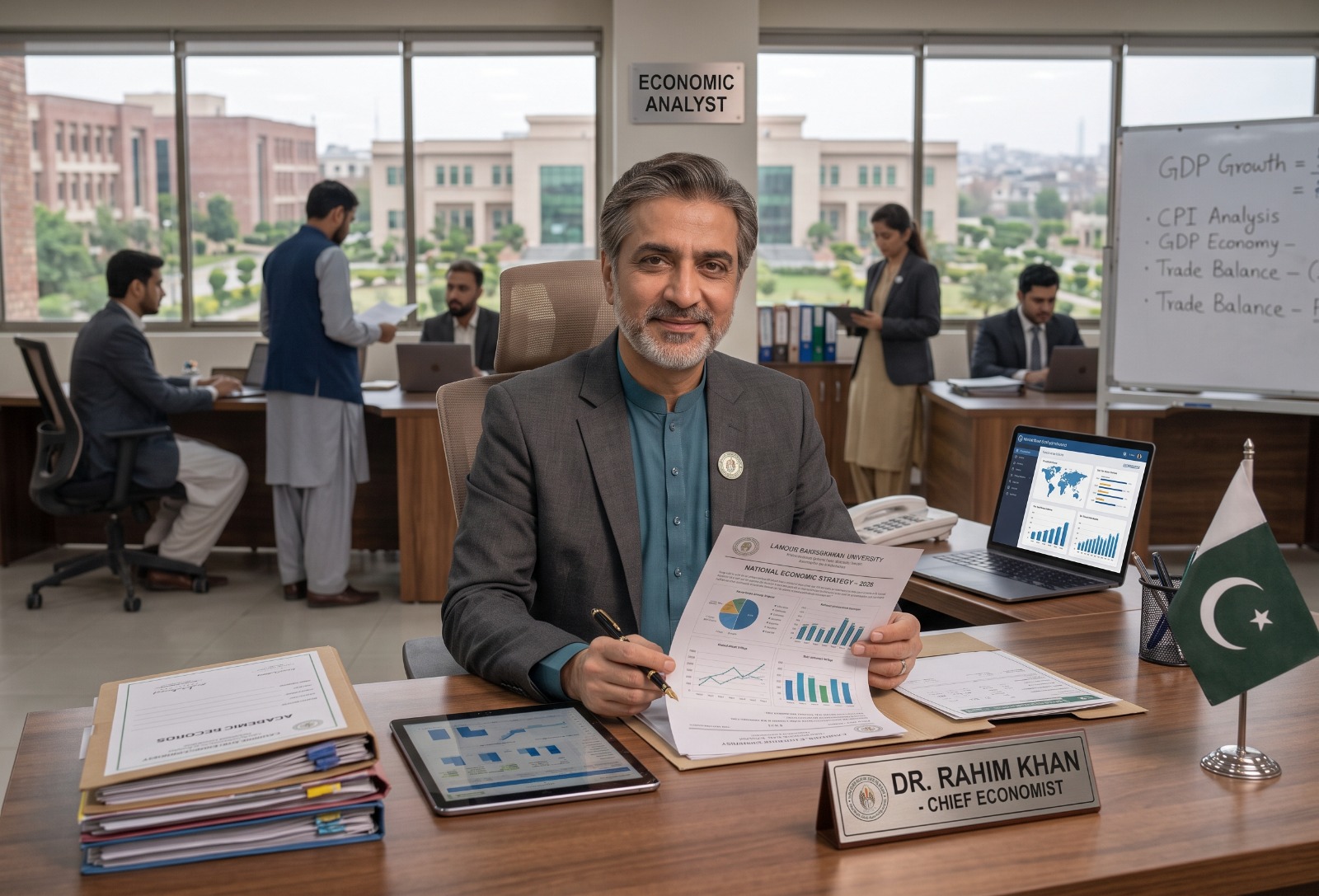
Economist
An Economist studies how individuals, businesses, and governments use resources, produce goods, and make financial decisions. They analyze economic data, markets, employment, inflation, trade, and public policies to provide insights and recommendations. Economists work in government departments, banks, research institutions, universities, consulting firms, and international organizations.
Career Cluster Tag:
On The Job You Would:
- Analyze economic data and market trends
- Prepare economic reports, forecasts, and policy recommendations
- Study inflation, employment, trade, and economic growth
- Conduct research on economic issues and policies
- Present findings to organizations, businesses, or government officials
Knowledge
- Microeconomics and macroeconomics
- Statistics and econometrics
- Financial markets and economic policies
- Research methods and data analysis
Skills
- Economic research and data analysis
- Statistical and econometric analysis
- Report writing and presentation
- Critical thinking and problem-solving
Abilities
- Strong mathematical and analytical ability
- Ability to interpret complex economic data
- Ability to identify trends and make forecasts
- Ability to communicate technical findings clearly
Personality
- Analytical and curious
- Logical and detail-oriented
- Research-oriented and patient
- Objective and solution-focused
Technology
- Microsoft Excel
- R and Python
- Stata and SPSS
- Statistical and economic forecasting software
Entry Requirements
- Intermediate (ICS / I.Com / Pre-Engineering or equivalent)
- Bachelor’s degree in Economics, Finance, Statistics, or a related field
- Master’s degree in Economics is preferred for research and senior positions
- Strong mathematics and statistics skills are beneficial
Job Outlook
Economists are needed in government policy, banking, financial services, research, consulting, and development organizations. Demand is particularly strong for professionals with skills in data analysis, econometrics, economic forecasting, and public policy.
Where can you work?
- State Bank and commercial banks
- Government ministries and economic departments
- Research institutes and universities
- Financial and consulting firms
- International development organizations and NGOs
Education
- BS Economics
- BS Economics & Finance
- MS/MPhil Economics
- PhD Economics for advanced research and academic careers
Where can you study?
- Lahore University of Management Sciences (LUMS)
- Quaid-i-Azam University, Islamabad
- Pakistan Institute of Development Economics (PIDE), Islamabad
- University of the Punjab, Lahore
- Institute of Business Administration (IBA), Karachi
- National University of Sciences and Technology (NUST)
Expenses & Scholarships
Economics degree programs generally cost between Rs. 50,000 and Rs. 500,000 per year, depending on the institution. Professional data analysis and econometrics courses may cost between Rs. 10,000 and Rs. 100,000. Scholarships are available through HEC, universities, PIDE, and merit- or need-based financial aid programs.
Similar Occupations: