
CAREERS ENCYCLOPEDIA

Sculptor
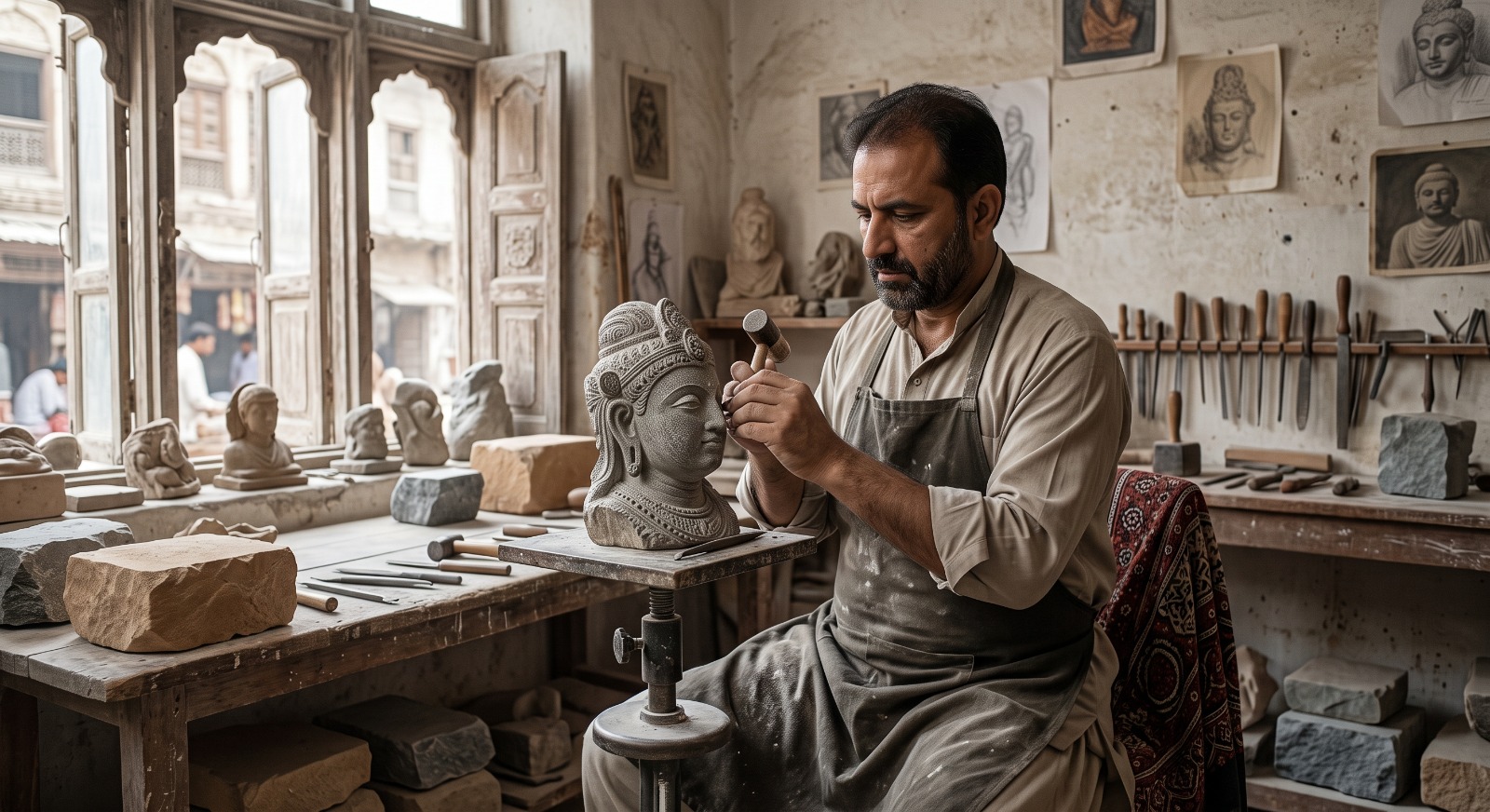
A Sculptor creates three dimensional artworks by shaping materials such as stone, wood, clay, metal, plaster, and other materials. Sculptors may create statues, decorative objects, monuments, public artworks, and commissioned pieces.
- Create sketches and concepts for sculptures
- Select suitable materials and tools
- Shape, carve, mold, or assemble materials
- Create statues and decorative artworks
- Use hand tools and power tools safely
- Make molds and casts when required
- Refine surfaces and finishing details
- Repair or restore sculptures when required
- Display or prepare completed artwork for clients and exhibitions
- Sculpture techniques
- Art history
- Drawing and visual composition
- Materials and their properties
- Color and surface finishing
- Art tools and equipment
- Basic safety procedures
- Three dimensional design
- Art preservation and restoration
- Sculpting
- Carving
- Model making
- Drawing and sketching
- Molding and casting
- Material handling
- Creative design
- Surface finishing
- Tool handling
- Project planning
- Ability to visualize three dimensional forms
- Ability to work with precision
- Ability to use hands and tools effectively
- Ability to concentrate for long periods
- Ability to understand proportions and shapes
- Ability to develop creative ideas
- Ability to work independently
- Ability to complete detailed work
- Creative
- Patient
- Detail oriented
- Imaginative
- Observant
- Persistent
- Independent
- Careful
- Passionate about art
- Sculpting tools
- Power carving tools
- Clay modeling tools
- 3D printers
- Digital sculpting software
- 3D modeling software
- Photography equipment
- Computer aided design tools
A formal degree is not always required to become a Sculptor. Artistic ability, practical training, a strong portfolio, and experience are important. Some employers and institutions may prefer candidates with formal education in fine arts or sculpture.
Sculptors can work as independent artists or find opportunities in art galleries, museums, educational institutions, cultural organizations, design studios, public art projects, and private commissions. Demand depends on artistic reputation, portfolio quality, commissions, exhibitions, and creative opportunities.
- Art studios
- Art galleries
- Museums
- Universities and art schools
- Cultural organizations
- Public art projects
- Monument and statue workshops
- Design studios
- Film and television production companies
- Advertising and creative agencies
- Independent art businesses
Students can study Fine Arts, Visual Arts, Sculpture, or related subjects. Practical training in drawing, clay modeling, carving, casting, and other sculpture techniques is also valuable.
- National College of Arts
- Indus Valley School of Art and Architecture
- University of the Punjab
- Beaconhouse National University
- University of Karachi
- Other recognized universities and art institutes offering Fine Arts and Visual Arts programs
Expenses vary depending on the institution and the materials used for practical work. Sculpture can involve additional costs for clay, stone, wood, metal, tools, molds, and other materials. Students can check universities and art institutions for merit based scholarships, need based financial aid, fee concessions, and other student support programs.