
CAREERS ENCYCLOPEDIA

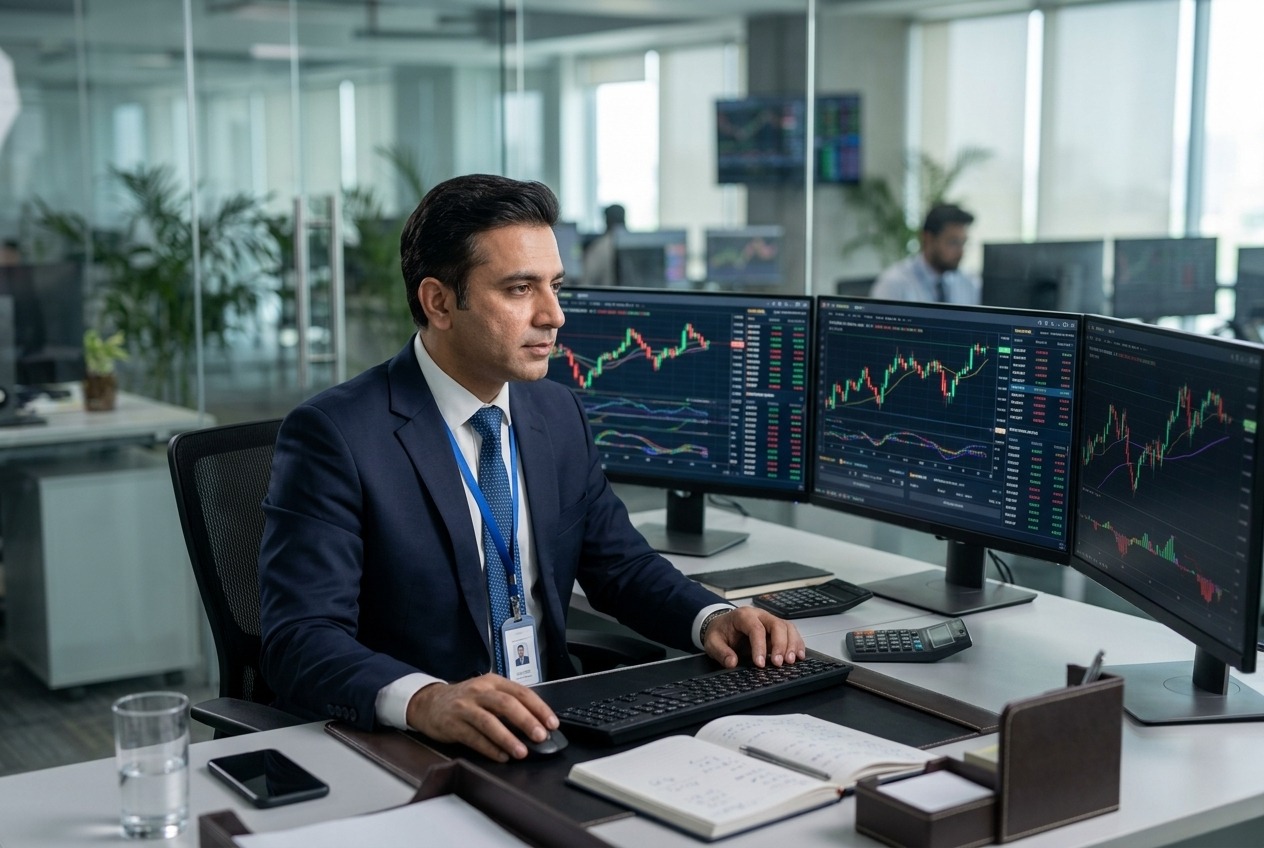
Forex Trader
A Forex Trader is a professional who buys and sells currencies in the foreign exchange market to benefit from changes in exchange rates. Forex traders study market trends, economic news, currency prices, and financial indicators to make trading decisions. They may work independently, for financial firms, or with trading organizations. In Pakistan, individuals should understand the applicable financial regulations and use legally permitted trading platforms.
- Study currency pairs and exchange rate movements.
- Analyze market charts, trends, and price patterns.
- Follow economic news, interest rates, and financial reports.
- Develop trading strategies based on market analysis.
- Monitor currency prices and market conditions.
- Place buy and sell orders through trading platforms.
- Set stop-loss and profit targets to manage risk.
- Maintain records of trades, gains, and losses.
- Review trading performance and improve strategies.
- Follow applicable financial rules and platform requirements.
Foreign Exchange Markets
- Understand currency pairs and exchange rate quotations.
- Learn how supply and demand affect currency prices.
- Understand market sessions and liquidity.
Economic and Financial Analysis
- Understand inflation, interest rates, and employment data.
- Study central bank decisions and economic indicators.
- Learn how political and economic events influence currencies.
Trading Principles
- Understand market orders, limit orders, and stop-loss orders.
- Learn technical and fundamental analysis.
- Understand leverage, margin, and trading costs.
Market Analysis
- Interpret currency charts and price movements.
- Identify trends and possible trading opportunities.
- Compare economic information from reliable sources.
Trading and Planning
- Develop and follow a trading plan.
- Calculate potential profit and loss before placing trades.
- Maintain accurate trading records.
Risk Management
- Set appropriate limits on potential losses.
- Manage position sizes carefully.
- Avoid decisions based on rumors or emotions.
Analytical Ability
- Interpret financial information and market data.
- Compare different market scenarios.
- Recognize patterns and changing conditions.
Numerical Ability
- Calculate currency movements and trading costs.
- Estimate risk-to-reward ratios.
- Understand percentages, margins, and account balances.
Decision-Making Ability
- Make decisions using available evidence.
- Respond carefully to changing market conditions.
- Evaluate outcomes and adjust strategies when necessary.
People interested in this career enjoy studying financial markets, analyzing numbers, and understanding global economic events.
They do well at jobs that need:
Discipline: Following a planned trading strategy.
Patience: Waiting for suitable market conditions.
Emotional Control: Managing fear and excitement during market changes.
Attention to Detail: Monitoring prices and economic information.
Responsibility: Understanding financial risks before making decisions.
Adaptability: Adjusting to changing market conditions.
Trading Platforms
- MetaTrader 4 and MetaTrader 5.
- Regulated broker trading platforms.
- TradingView for charts and market analysis.
Market Research Tools
- Economic calendars.
- Financial news services.
- Currency charts and technical indicators.
Data and Record Management
- Microsoft Excel or Google Sheets.
- Trading journals and performance tracking tools.
- Risk calculation and position sizing tools.
- Complete Intermediate education or an equivalent qualification.
- Study finance, economics, accounting, mathematics, or business where possible.
- Learn foreign exchange markets, technical analysis, and fundamental analysis.
- Practice using demo accounts before risking real money.
- Develop a written trading plan and risk management rules.
- Verify the legal status of the broker and trading platform before opening an account.
- Understand applicable financial regulations in Pakistan.
Forex trading is accessible through online platforms, but it is a high-risk activity and does not guarantee income. Employment opportunities may exist in financial research, market analysis, treasury operations, and related financial services. Independent trading income can be unpredictable, and leverage can increase losses significantly. In Pakistan, traders should verify current State Bank of Pakistan and Securities and Exchange Commission of Pakistan requirements, as applicable, before engaging with a trading service.
- Financial services companies, where permitted.
- Banks and treasury departments.
- Investment research organizations.
- Financial market analysis firms.
- International financial institutions.
- Financial education and market research companies.
- Licensed or otherwise legally permitted brokerage businesses.
- Independent trading from home, subject to applicable laws and platform rules.
- Intermediate in Commerce, Science, or Computer Science.
- Bachelor's degree in Finance or Accounting.
- Bachelor's degree in Economics.
- Bachelor's degree in Business Administration.
- Courses in financial markets and investment analysis.
- Training in technical analysis, financial risk management, and trading psychology.
- Pakistan Institute of Development Economics (PIDE), Islamabad: Economics and related fields.
- Quaid-i-Azam University, Islamabad: Economics and business-related study options.
- National University of Sciences and Technology (NUST), Islamabad: Business and finance-related programs.
- COMSATS University Islamabad: Business, economics, and related programs.
- Institute of Business Administration (IBA), Karachi: Business and finance education.
- University of the Punjab, Lahore: Business, commerce, and economics programs.
- Virtual University of Pakistan: Flexible online study options in relevant business fields.
- Public university bachelor's degree: Approximately PKR 40,000 to 250,000 per semester.
- Private university bachelor's degree: Approximately PKR 100,000 to 500,000 or more per semester.
- Online financial market courses: PKR 5,000 to 50,000.
- Specialized trading and technical analysis courses: PKR 10,000 to 100,000.
- Books and learning materials: PKR 5,000 to 25,000.
- Trading software and data tools: Free options to PKR 20,000 or more per month.
- Practice account: Many platforms offer demo accounts without requiring real money.
- Scholarships: Eligible students may receive partial or full tuition support through university merit scholarships, need-based assistance, or government programs.