
CAREERS ENCYCLOPEDIA

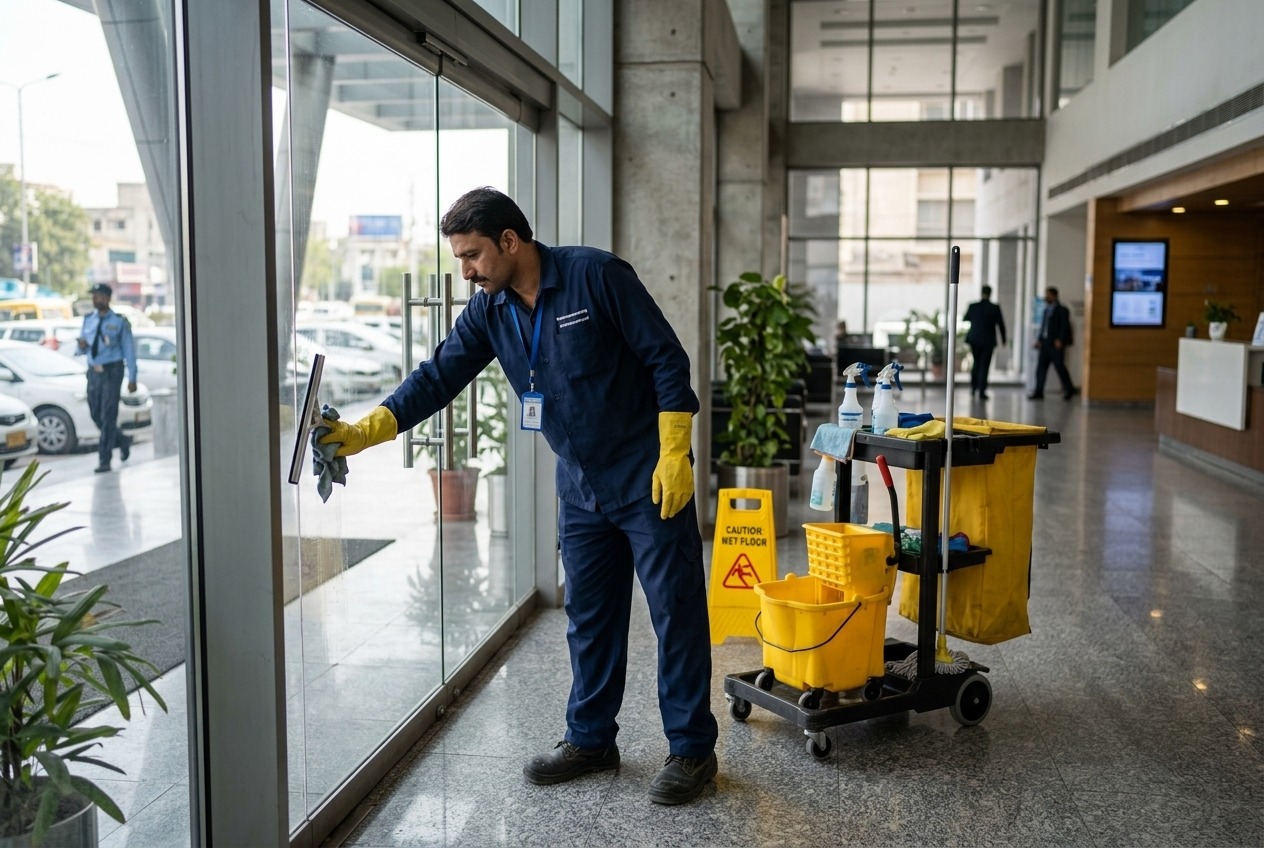
Building Cleaner
A Building Cleaner maintains cleanliness, hygiene, and order in residential, commercial, and public buildings. They clean floors, windows, washrooms, offices, and common areas, remove waste, and use cleaning products and equipment to provide a safe and pleasant environment.
- Sweep, mop, and vacuum floors.
- Clean offices, corridors, stairways, and common areas.
- Wash and sanitize bathrooms and washrooms.
- Clean windows, doors, walls, and other surfaces.
- Empty waste bins and dispose of rubbish properly.
- Refill soap, tissue, and other cleaning supplies.
- Use cleaning chemicals and equipment safely.
- Report maintenance issues and damaged fixtures.
- Follow hygiene and workplace safety procedures.
- Keep cleaning tools and storage areas organized.
Cleaning Methods
- Understand cleaning methods for different surfaces.
- Know the correct use of cleaning products.
- Understand basic stain removal techniques.
Hygiene and Sanitation
- Understand workplace cleanliness requirements.
- Know proper waste disposal methods.
- Understand procedures for sanitizing washrooms and shared spaces.
Health and Safety
- Understand safe handling of cleaning chemicals.
- Know how to use protective equipment.
- Understand procedures for preventing slips and falls.
Surface Cleaning
- Sweep, mop, and vacuum different floor types.
- Clean glass, furniture, and fixtures.
- Remove dust, stains, and dirt effectively.
Equipment Handling
- Use vacuum cleaners and floor-cleaning machines.
- Maintain cleaning tools and supplies.
- Store equipment safely after use.
Time Management
- Complete assigned cleaning tasks on schedule.
- Prioritize busy and high-use areas.
- Maintain cleanliness throughout the workday.
Physical Ability
- Stand and walk for extended periods.
- Perform repetitive cleaning tasks.
- Move cleaning supplies and equipment safely.
Attention to Detail
- Notice dirt and missed areas.
- Check washrooms and shared spaces carefully.
- Maintain consistent cleaning standards.
Organizational Ability
- Follow cleaning schedules.
- Arrange supplies and equipment properly.
- Complete assigned tasks in an orderly manner.
A Building Cleaner is dependable, hardworking, organized, careful, and cooperative.
They do well at jobs that need:
Reliability: Arrives on time and completes assigned tasks.
Cleanliness: Maintains high hygiene standards.
Patience: Performs repetitive tasks carefully.
Responsibility: Uses cleaning products safely.
Discipline: Follows schedules and procedures.
Teamwork: Works well with other cleaning staff.
Cleaning Equipment
- Use vacuum cleaners and floor scrubbers.
- Operate suitable polishing and washing machines.
- Use basic tools for routine cleaning tasks.
Cleaning Products
- Use detergents, disinfectants, and surface cleaners.
- Follow product labels and dilution instructions.
- Store chemicals safely and separately when required.
Workplace Systems
- Follow digital or printed cleaning schedules.
- Record completed tasks when required.
- Report supply shortages and maintenance issues.
- Formal education is generally not required for entry-level positions.
- Basic reading and communication skills are beneficial.
- Knowledge of cleaning methods and hygiene practices.
- Ability to use cleaning tools and equipment safely.
- Physical ability to perform routine cleaning duties.
- Willingness to follow workplace rules and schedules.
- Previous cleaning or housekeeping experience is beneficial.
- Safety training may be required for specialized buildings or equipment.
Building Cleaners are employed in residential buildings, offices, hospitals, schools, shopping centers, hotels, and industrial facilities. Demand is supported by the ongoing need for clean and hygienic environments. With experience, workers may progress to senior cleaner, housekeeping supervisor, cleaning team leader, or facilities support roles.
- Office buildings and corporate workplaces.
- Hospitals and healthcare facilities.
- Schools, colleges, and universities.
- Hotels and guest houses.
- Shopping malls and retail stores.
- Apartment buildings and residential complexes.
- Factories and warehouses.
- Government offices and public buildings.
- Cleaning service companies.
- Airports and transport facilities.
- Basic school education is helpful but not always required.
- Short courses in housekeeping and cleaning services.
- Training in workplace hygiene and sanitation.
- Occupational health and safety training.
- Practical training in the use of cleaning equipment.
- Specialized cleaning training for healthcare or industrial settings.
- National Vocational and Technical Training Commission (NAVTTC) affiliated training providers.
- Technical Education and Vocational Training Authority (TEVTA), Punjab.
- Khyber Pakhtunkhwa Technical Education and Vocational Training Authority (KP-TEVTA).
- Sindh Technical Education and Vocational Training Authority (STEVTA).
- Government vocational training institutes offering housekeeping or facility services courses.
- Private hospitality and housekeeping training centers.
- Basic cleaning skills training: PKR 5,000 to 20,000.
- Housekeeping course: PKR 10,000 to 40,000.
- Workplace hygiene and sanitation training: PKR 5,000 to 20,000.
- Occupational safety course: PKR 5,000 to 25,000.
- Cleaning tools and protective equipment: PKR 5,000 to 20,000.
- Specialized cleaning equipment training: PKR 10,000 to 35,000.
- Scholarships and financial assistance: Eligible learners may access free or subsidized vocational courses through selected government training programs.