
CAREERS ENCYCLOPEDIA

Air Traffic Controller
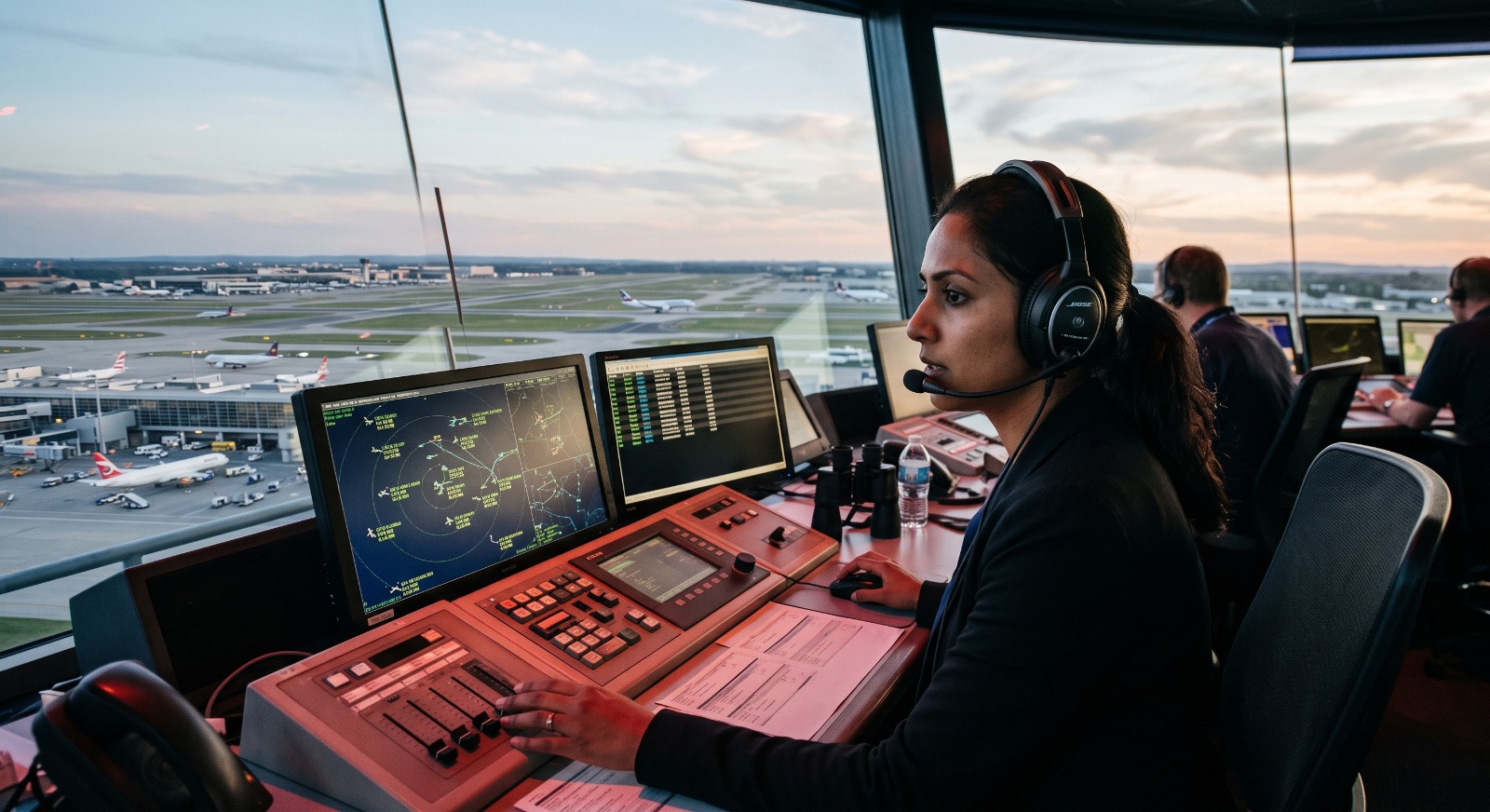
An Air Traffic Controller (ATC) is responsible for managing the safe and efficient movement of aircraft on the ground and in the air. They communicate with pilots, provide takeoff and landing clearances, monitor aircraft positions using radar, and ensure safe distances between aircraft. Air Traffic Controllers play a critical role in aviation safety and work under high levels of responsibility and precision.
- Monitor aircraft movements using radar and communication systems
- Give pilots instructions for takeoff, landing, and flight routes
- Maintain safe distances between aircraft
- Coordinate with other air traffic control units
- Respond quickly to emergencies and changing weather conditions
- Air traffic control procedures
- Aviation rules and regulations
- Aircraft operations and navigation
- Weather and aviation safety
- Radio communication
- Decision-making and problem-solving
- Attention to detail
- Multitasking and coordination
- Ability to concentrate for long periods
- Ability to make quick and accurate decisions
- Ability to understand spatial relationships
- Ability to remain calm under pressure
- Focused and disciplined
- Calm and responsible
- Confident and decisive
- Alert and detail-oriented
- Radar and surveillance systems
- Air traffic control communication systems
- Flight tracking software
- Navigation and weather monitoring systems
- Intermediate or equivalent education is generally required for entry-level training programs
- Strong English communication and mathematics skills are important
- Candidates must meet prescribed medical and aptitude requirements
- Specialized air traffic control training and certification are required
Air Traffic Controllers are essential to safe aviation operations. Employment opportunities are available with aviation authorities, airports, air navigation service providers, and military aviation organizations.
- Airports and control towers
- Air traffic control centers
- Air navigation service providers
- Civil aviation authorities
- Military aviation facilities
- Intermediate or equivalent
- Diploma or specialized training in Air Traffic Control
- Bachelor’s degree in Aviation Management or a related field can be beneficial
- Professional air traffic control certifications and training
- Pakistan Civil Aviation Authority training facilities
- Institute of Aviation, University of the Punjab
- Air University, Islamabad
- National University of Sciences and Technology (NUST)
- University of Lahore
Relevant aviation and bachelor’s degree programs generally cost between Rs. 60,000 and Rs. 600,000 per year, depending on the institution. Specialized aviation training may have additional costs. Scholarships and financial assistance may be available through HEC, universities, and merit- or need-based programs.