
CAREERS ENCYCLOPEDIA

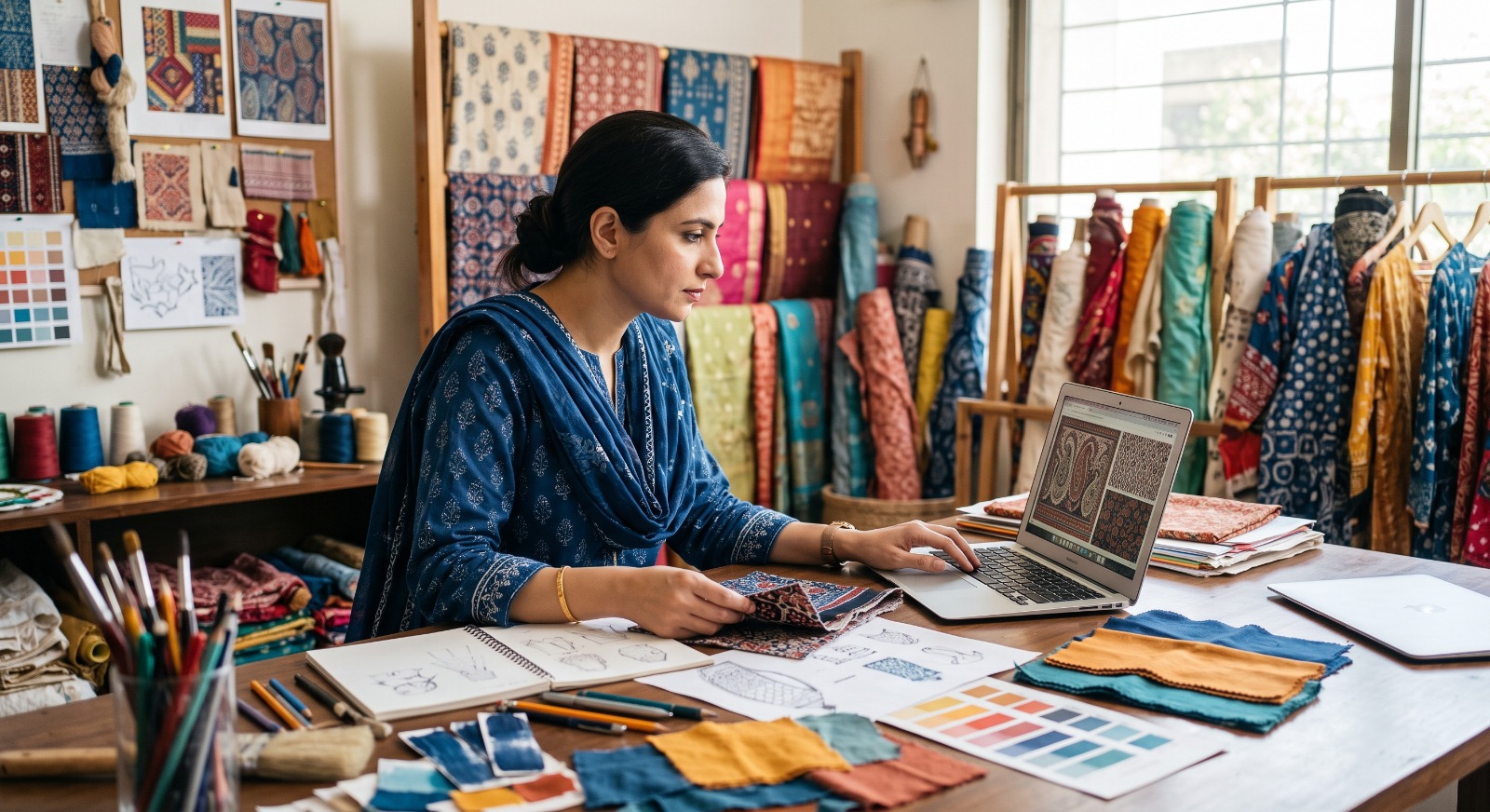
Fabric Designer
A Fabric Designer creates patterns, prints, textures, and color combinations for fabrics used in clothing, home furnishings, accessories, and other textile products. They develop designs based on fashion trends, customer requirements, and production needs.
- Create fabric patterns and surface designs
- Develop prints, motifs, and color combinations
- Research fashion and textile trends
- Create hand drawn and digital designs
- Select suitable colors and materials
- Prepare designs for textile production
- Work with textile manufacturers and fashion designers
- Modify designs based on client requirements
- Review fabric samples and finished products
- Maintain records of designs and samples
- Textile design
- Fabric types
- Color theory
- Pattern design
- Printing techniques
- Textile production
- Fashion trends
- Surface decoration
- Design principles
- Textile design
- Pattern making
- Drawing and illustration
- Color coordination
- Digital design
- Creative thinking
- Trend research
- Design presentation
- Attention to detail
- Create original textile patterns
- Develop attractive color combinations
- Understand fabric characteristics
- Convert ideas into workable designs
- Adapt designs for different fabrics
- Work according to production requirements
- Identify visual and design problems
- Creative
- Artistic
- Detail oriented
- Imaginative
- Patient
- Observant
- Organized
- Adaptable
- Adobe Photoshop
- Adobe Illustrator
- CorelDRAW
- Textile design software
- Digital drawing tablets
- Color matching tools
- Computer aided design systems
- Digital printing technology
A bachelor's degree, diploma, or certificate in textile design, fashion design, fine arts, or a related field can be helpful. Practical design skills, knowledge of fabrics, and a strong portfolio are important for employment and freelance opportunities.
Fabric Designers can work in textile mills, fashion companies, garment manufacturers, home furnishing businesses, and design studios. They can also work independently as freelance designers or develop their own textile design collections.
- Textile mills
- Fashion houses
- Garment manufacturers
- Textile design studios
- Home furnishing companies
- Export companies
- Printing and dyeing units
- Apparel brands
- Interior design companies
- Freelance design businesses
- Diploma in Textile Design
- Diploma in Fashion Design
- Bachelor's degree in Textile Design
- Bachelor's degree in Fashion Design
- Bachelor's degree in Fine Arts
- Courses in Surface Pattern Design
- National College of Arts
- Indus Valley School of Art and Architecture
- Pakistan Institute of Fashion and Design
- Beaconhouse National University
- University of the Punjab
- Textile and fashion institutes in Pakistan
Education costs vary depending on the institution and program. Students can explore merit scholarships, need based financial assistance, university scholarships, and government supported education programs. Additional costs may include art materials, design software, fabric samples, and portfolio development.