
CAREERS ENCYCLOPEDIA

Physicist
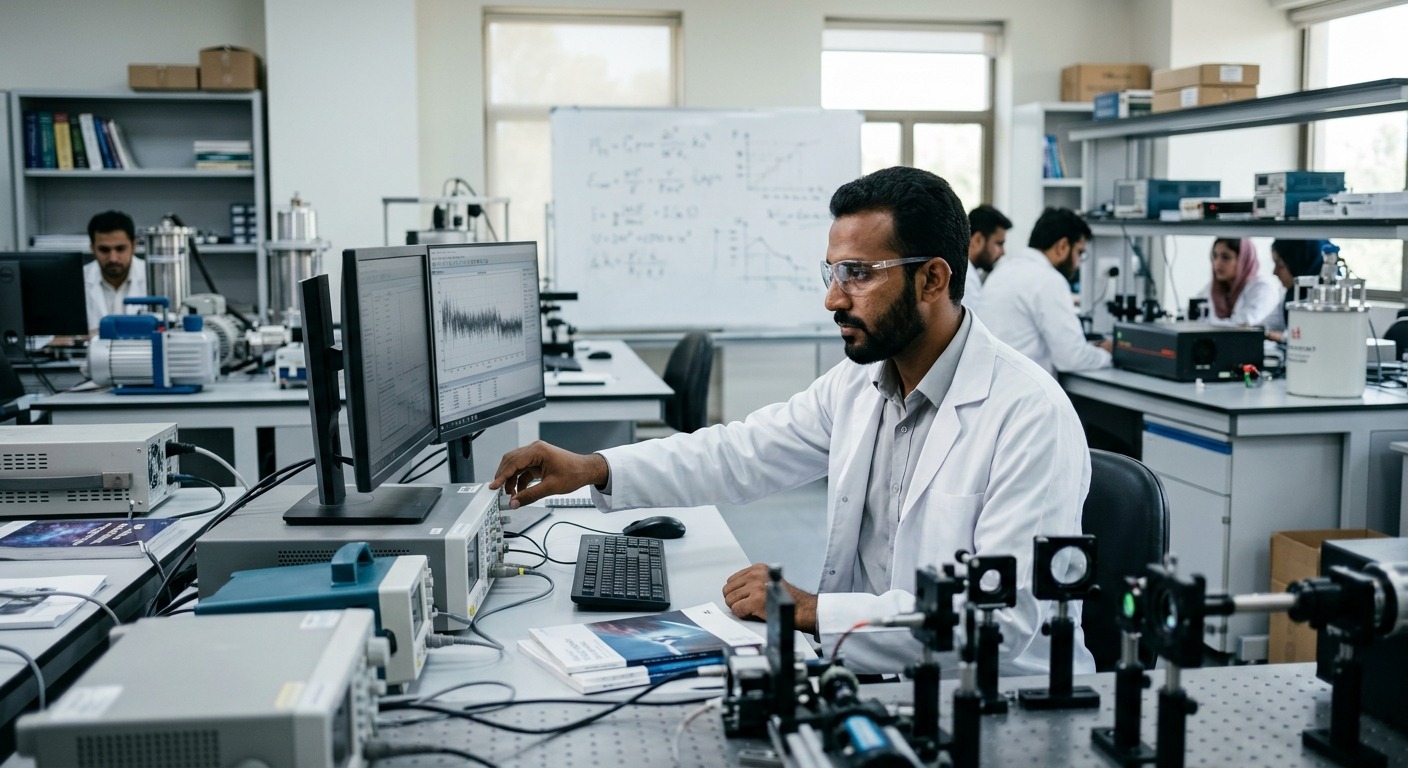
A Physicist studies matter, energy, forces and the laws that describe the natural world. They conduct experiments, analyze scientific data and apply physics principles in research, technology, energy, healthcare and education.
- Conduct physics experiments
- Study physical properties and processes
- Collect and analyze scientific data
- Develop mathematical models
- Operate laboratory equipment
- Prepare research reports
- Test scientific theories
- Use computer simulations
- Present research findings
Physics
- Mechanics
- Electricity and magnetism
- Thermodynamics
Modern Physics
- Quantum physics
- Nuclear physics
- Particle physics
Mathematics
- Calculus
- Mathematical modeling
- Statistical methods
Scientific Research
- Design experiments
- Collect accurate measurements
- Evaluate research results
Mathematical Analysis
- Apply mathematical methods
- Develop scientific models
- Interpret numerical results
Laboratory Work
- Operate scientific equipment
- Follow experimental procedures
- Maintain laboratory records
Analytical
- Analyze complex physical problems
- Interpret scientific data
Numerical
- Perform mathematical calculations
- Work with quantitative information
Scientific Reasoning
- Test scientific ideas
- Draw conclusions from evidence
People interested in this work like activities that include science, mathematics, experiments, and understanding how the physical world works.
They do well at jobs that need:
- Curiosity
- Analytical Thinking
- Patience
- Accuracy
- Persistence
Laboratory Equipment
- Spectrometers
- Oscilloscopes
- Particle detectors
Scientific Software
- MATLAB
- Mathematica
- COMSOL Multiphysics
Programming
- Python
- C++
- Scientific computing tools
- Intermediate with Physics and Mathematics
- Bachelor degree in Physics or a related field
- Strong mathematics and analytical skills
- Laboratory and computer skills
- Master's or PhD may be required for advanced research positions
Physicists can work in research, universities, education, healthcare, energy, engineering and technology. Advanced research and academic positions generally require postgraduate qualifications.
- Universities
- Research laboratories
- Pakistan Atomic Energy Commission organizations
- Space and technology organizations
- Hospitals and medical research centers
- Energy companies
- Schools and colleges
- Technology and engineering companies
- Intermediate with Physics and Mathematics
- Bachelor degree in Physics
- Master degree in Physics
- MPhil or PhD for advanced research
- Specialized training in areas such as nuclear, medical or materials physics
- Quaid-i-Azam University
- University of the Punjab
- University of Karachi
- Government College University Lahore
- University of Peshawar
- COMSATS University Islamabad
- Bachelor degree: PKR 60,000 to 350,000 per year
- Private university: PKR 150,000 to 500,000 per year
- Laboratory and project costs: PKR 10,000 to 50,000 per year
- Scientific software and courses: PKR 10,000 to 60,000
- Research degree costs vary by university and program
- Merit scholarships: 25 percent to 100 percent
- Need based financial aid may also be available