
CAREERS ENCYCLOPEDIA

Scientific Officer
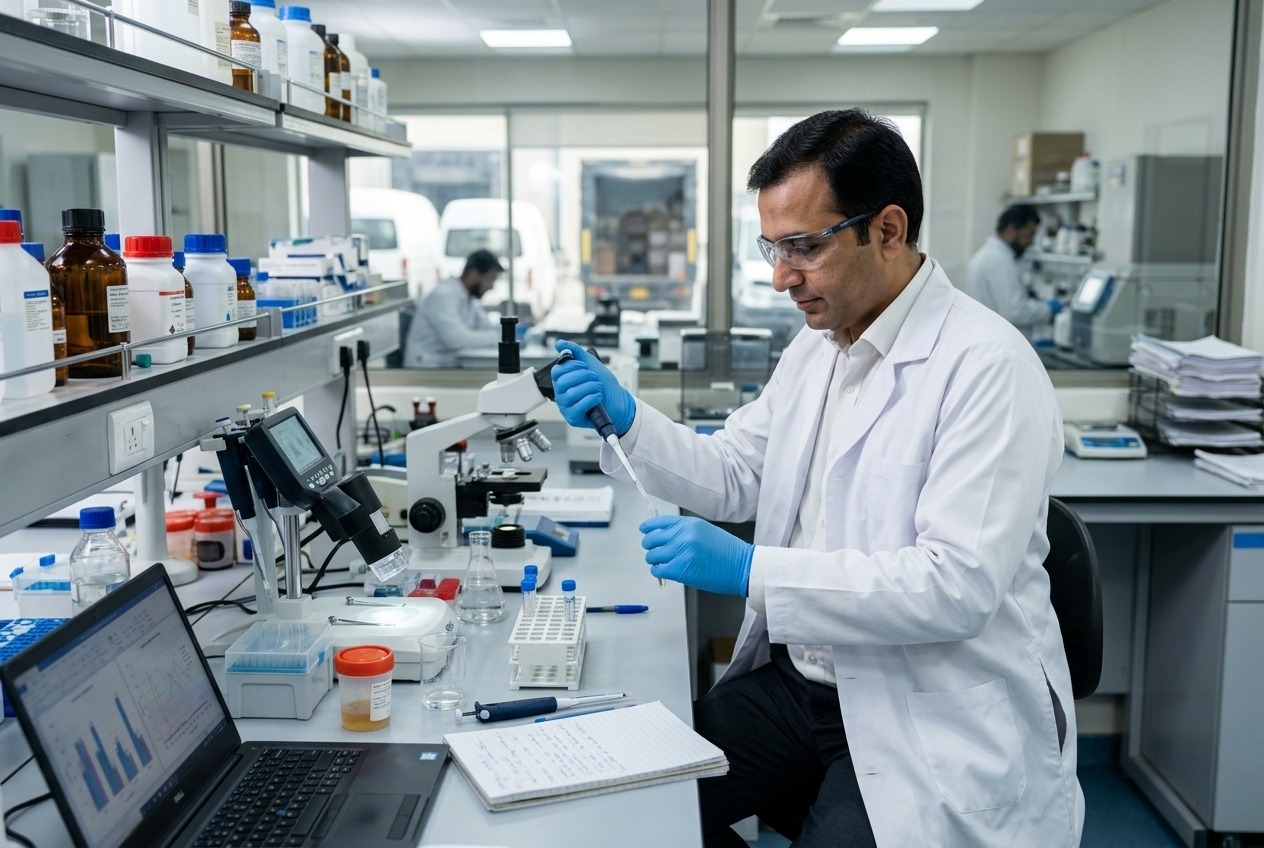
A Scientific Officer conducts scientific research, performs experiments, analyzes data, and supports technical activities in laboratories or research organizations. This professional applies scientific methods to investigate problems, test ideas, prepare reports, and contribute to new findings. In Pakistan, Scientific Officers may work in government research departments, universities, laboratories, healthcare institutions, environmental organizations, and industrial research facilities.
- Conduct scientific experiments and research activities
- Collect samples and scientific information
- Operate laboratory instruments and research equipment
- Analyze experimental results and research data
- Prepare scientific reports and technical documents
- Maintain laboratory records and research databases
- Follow laboratory safety and quality procedures
- Assist senior researchers with scientific investigations
- Monitor research projects and experimental progress
- Present findings to research teams and relevant departments
Scientific Principles
- Understand fundamental concepts in the relevant scientific field
- Know scientific methods used to investigate research questions
- Understand experimental design and research procedures
Laboratory Methods
- Understand sample collection, preparation, and testing
- Know how to operate common scientific instruments
- Understand laboratory safety and quality control procedures
Research and Data Analysis
- Understand data collection and interpretation methods
- Know basic statistical concepts used in scientific research
- Understand scientific reporting and documentation standards
Research and Experimentation
- Conduct experiments according to established procedures
- Collect and record scientific observations accurately
- Follow research protocols and testing methods
Data Analysis and Reporting
- Analyze research data and identify patterns
- Prepare technical reports and research summaries
- Use spreadsheets and scientific software to organize results
Laboratory Management
- Handle samples and equipment carefully
- Maintain laboratory records and testing schedules
- Follow safety, cleanliness, and quality standards
Analytical Ability
- Interpret experimental results and scientific information
- Identify unusual findings and possible sources of error
- Compare results with established scientific standards
Technical Ability
- Operate scientific equipment according to procedures
- Perform laboratory tests and measurements accurately
- Apply scientific methods to practical problems
Problem-Solving Ability
- Identify challenges during experiments
- Investigate possible causes of unexpected results
- Suggest improvements to research procedures
People interested in this work like activities that include scientific investigation, experimentation, learning, analyzing information, and solving problems.
They do well at jobs that need:
Analytical
Curious
Patient
Responsible
Detail-oriented
Methodical
Laboratory Instruments
- Microscopes and analytical balances
- Spectrophotometers and testing equipment, depending on the field
- Laboratory measurement and sample preparation tools
Research and Data Analysis Software
- Microsoft Excel
- Statistical software such as SPSS or R
- Scientific data analysis and visualization tools
Documentation and Research Tools
- Microsoft Word
- Microsoft PowerPoint
- Digital research databases and laboratory information systems
- Bachelor's degree in a relevant scientific field such as Chemistry, Biology, Physics, Biotechnology, Environmental Science, or another related discipline
- A master's degree may be required for specialized research positions
- Strong understanding of scientific methods and laboratory procedures
- Practical experience with experiments, research equipment, or scientific testing
- Knowledge of data analysis and technical report writing
- Computer proficiency and familiarity with relevant scientific software
- Relevant research projects, internships, or laboratory experience can be beneficial
Scientific Officers may find opportunities in government research organizations, universities, laboratories, industrial research facilities, environmental departments, and scientific testing centers in Pakistan. Job requirements vary according to the scientific discipline and employer. Candidates with specialized qualifications, laboratory experience, research skills, and data analysis knowledge may have broader opportunities. With experience, they may progress to Senior Scientific Officer, Research Scientist, Laboratory Manager, or Research Project Coordinator roles.
- Pakistan Council of Scientific and Industrial Research (PCSIR)
- Pakistan Agricultural Research Council (PARC)
- National research laboratories and scientific institutions
- Public and private universities
- Pharmaceutical and biotechnology companies
- Environmental testing and monitoring laboratories
- Food quality testing laboratories
- Healthcare and diagnostic research facilities
- Industrial quality control departments
- Government scientific and technical departments
- Bachelor's degree in Chemistry, Biology, Physics, or another relevant science
- Bachelor's degree in Biotechnology, Microbiology, or Environmental Science for related positions
- Master's degree in a specialized scientific discipline
- MPhil or PhD for advanced research roles, where required
- Short courses in laboratory safety and quality control
- Training in scientific research methods and data analysis
- Practical laboratory internships or research projects
- Quaid-i-Azam University, Islamabad
- National University of Sciences and Technology, Islamabad
- COMSATS University Islamabad
- University of the Punjab, Lahore
- University of Karachi, Karachi
- Government College University, Lahore
- Pakistan Institute of Engineering and Applied Sciences, Islamabad
- Bachelor's degree at a public university: PKR 60,000 to 300,000 per year
- Private university education: PKR 150,000 to 700,000 per year
- Master's degree in a scientific field: PKR 80,000 to 500,000 per year
- Laboratory and research training courses: PKR 10,000 to 60,000
- Specialized scientific software training: PKR 10,000 to 50,000
- Laboratory materials and practical expenses: PKR 10,000 to 50,000 per year
- Books and study materials: PKR 10,000 to 40,000 per year
- Merit scholarships: 25 percent to 100 percent, depending on the institution and eligibility
- Need-based financial aid and research funding may also be available