
CAREERS ENCYCLOPEDIA

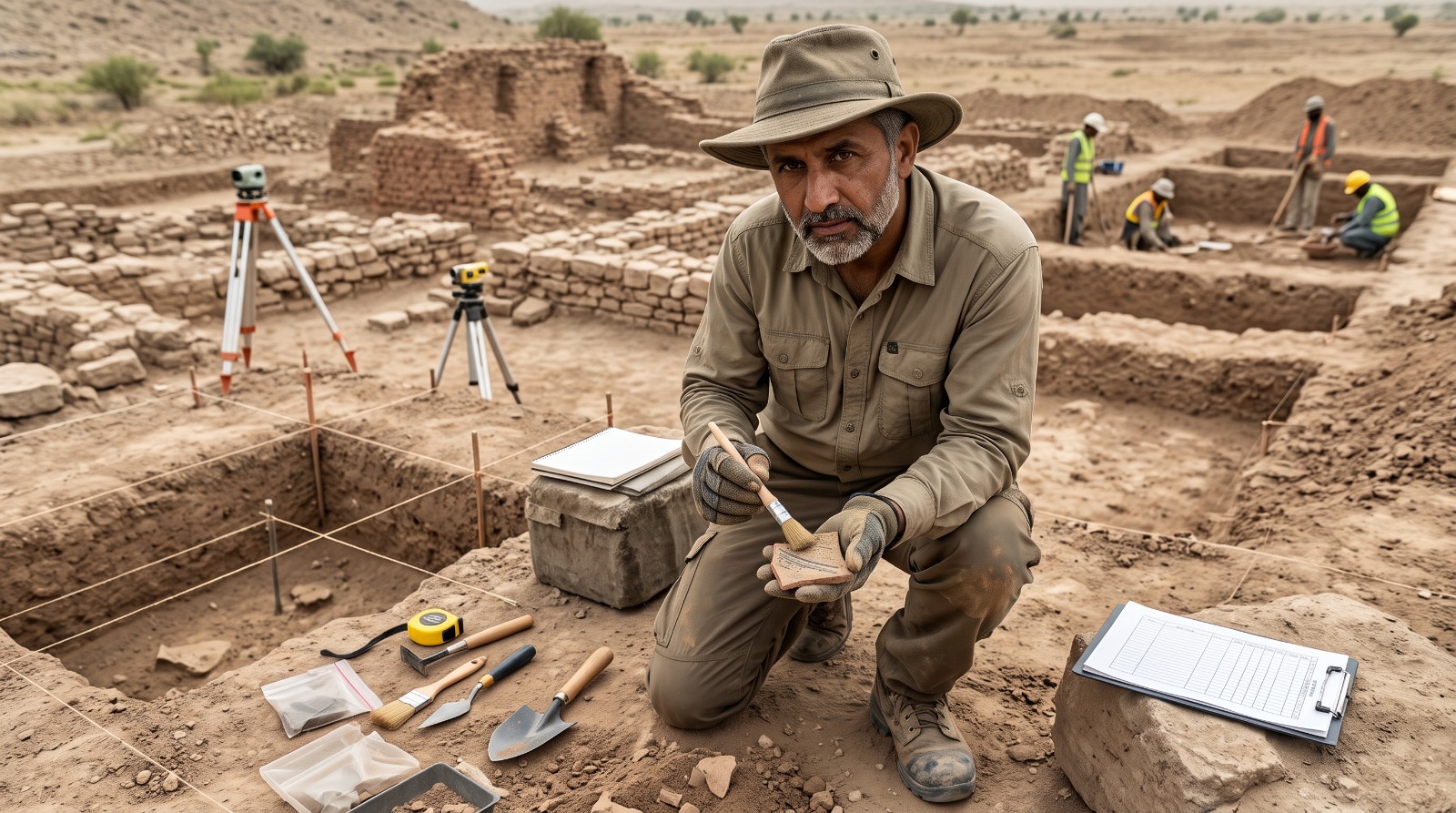
Archaeologist
An Archaeologist studies past human societies by examining artifacts, buildings, monuments, tools, pottery, and other remains. They conduct excavations, document historical sites, analyze discoveries, and help preserve cultural heritage for future generations.
- Survey archaeological sites and identify areas of historical importance.
- Conduct excavations to uncover artifacts and ancient structures.
- Record the location, condition, and context of discoveries.
- Clean, classify, and document artifacts for further study.
- Analyze pottery, tools, coins, bones, and other archaeological materials.
- Prepare excavation reports, maps, photographs, and research papers.
- Work with historians, conservators, architects, and museum professionals.
- Help protect archaeological sites from damage and illegal excavation.
- Assist in preserving and displaying historical objects.
- Present research findings to academic, government, and public audiences.
Archaeological Methods
- Understand excavation, surveying, and site recording techniques.
- Know how artifacts are classified and documented.
- Understand archaeological dating methods and their limitations.
History and Ancient Civilizations
- Understand the history of ancient societies and settlements.
- Know the cultural and historical significance of artifacts.
- Understand regional archaeological traditions in Pakistan and South Asia.
Heritage Conservation
- Understand the preservation of artifacts and historic structures.
- Know the principles of archaeological site protection.
- Understand relevant heritage laws and ethical research practices.
Fieldwork and Excavation
- Use archaeological tools carefully during excavations.
- Record measurements, layers, and artifact locations.
- Document sites through photographs, drawings, and field notes.
Research and Analysis
- Examine artifacts and identify patterns in historical evidence.
- Review academic publications and historical records.
- Prepare research reports and evidence-based conclusions.
Documentation and Communication
- Maintain accurate excavation records.
- Prepare maps, catalogues, and research presentations.
- Communicate findings to colleagues and the public.
Observation and Attention to Detail
- Identify small or partially buried archaeological objects.
- Notice differences in materials, patterns, and structures.
- Record discoveries accurately.
Analytical Ability
- Interpret evidence from artifacts and archaeological layers.
- Compare findings with existing historical information.
- Develop reasonable explanations based on available evidence.
Physical and Spatial Ability
- Work outdoors and participate in field excavations.
- Understand site layouts, maps, and spatial relationships.
- Adapt to changing weather and field conditions.
Archaeologists are generally curious, patient, methodical, and interested in history and human cultures. They do well at jobs that need:
Curiosity: Investigate questions about past societies.
Patience: Work carefully during lengthy excavations and analysis.
Attention to Detail: Protect and document fragile evidence.
Critical Thinking: Evaluate historical interpretations.
Integrity: Record findings honestly and follow research ethics.
Adaptability: Work in museums, laboratories, and outdoor sites.
Surveying and Mapping
- Use GPS devices and digital mapping tools.
- Work with Geographic Information Systems (GIS).
- Use total stations and surveying equipment where required.
Digital Documentation
- Use cameras and photogrammetry to document sites.
- Prepare digital catalogues and research databases.
- Use 3D scanning and modeling tools where available.
Laboratory and Research Tools
- Use microscopes and measurement tools to examine artifacts.
- Work with laboratory specialists on scientific dating and material analysis.
- Use digital libraries and academic databases for research.
- A bachelor's degree in Archaeology, Archaeology and Anthropology, or a related discipline is commonly required for professional entry.
- A master's degree may be necessary for research, specialist, or senior positions.
- Knowledge of ancient history, cultural heritage, and archaeological methods.
- Fieldwork experience through supervised excavations or internships.
- Research, documentation, and report-writing skills.
- Ability to work outdoors and handle artifacts carefully.
- Computer skills for mapping, databases, and research.
- Knowledge of relevant heritage laws and conservation ethics.
- Additional language skills can be useful for historical research.
Archaeologists can work in government heritage departments, museums, universities, research organizations, and cultural heritage projects. In Pakistan, opportunities may be linked to the study and preservation of archaeological sites and historic civilizations, including those in Mohenjo-daro, Harappa, Taxila, and the Gandhara region. Permanent research positions can be competitive, and postgraduate qualifications and field experience may improve prospects. Experienced professionals may progress to Senior Archaeologist, Researcher, Museum Curator, Heritage Conservation Specialist, or Archaeology Project Director.
- Department of Archaeology and Museums, Government of Pakistan.
- Provincial archaeology and heritage departments.
- Museums and historical collections.
- Universities and academic research centers.
- Archaeological excavation and conservation projects.
- Cultural heritage and historic site management organizations.
- Research institutes and nonprofit heritage organizations.
- International archaeological and cultural heritage projects.
- Heritage tourism and interpretation centers.
- Universities and laboratories conducting archaeological research.
- BS Archaeology or a related recognized undergraduate degree.
- MA or MS in Archaeology, Anthropology, Heritage Studies, or a relevant specialization.
- Training in excavation, surveying, and archaeological recording.
- Courses in ancient history and material culture.
- GIS, mapping, and digital documentation training.
- Research methods, academic writing, and heritage conservation courses.
- Supervised fieldwork and museum internships.
- PhD for advanced academic and specialized research careers.
- Quaid-i-Azam University, Islamabad: Explore archaeology, anthropology, and related research programs.
- University of Peshawar: Explore archaeology and relevant historical research programs.
- University of the Punjab, Lahore: History, archaeology-related, and heritage research opportunities where offered.
- Hazara University, Mansehra: Explore archaeology, anthropology, and related humanities programs.
- Bahauddin Zakariya University, Multan: Relevant history and archaeological research programs where available.
- University of Karachi: History, anthropology, and related research disciplines.
- Department of Archaeology and Museums, Government of Pakistan: Information about heritage research and relevant professional opportunities.
- Provincial archaeology departments and museums: Potential fieldwork, internship, and heritage learning opportunities.
- Public university bachelor's degree: PKR 60,000 to 300,000 per year.
- Private university bachelor's degree: PKR 150,000 to 700,000 per year.
- Master's degree: PKR 100,000 to 500,000 in total, depending on the institution and program.
- Short GIS or mapping course: PKR 10,000 to 50,000.
- Heritage conservation or field methods training: PKR 10,000 to 40,000.
- Books, research materials, and printing: PKR 10,000 to 30,000 per year.
- Fieldwork travel and accommodation: PKR 10,000 to 60,000 per field trip, depending on location and duration.
- Eligible students may receive 25% to 100% financial assistance through university scholarships, HEC-supported schemes, provincial programs, or need-based aid.
- Research projects may offer funded fieldwork, stipends, or assistantships for selected students.