
CAREERS ENCYCLOPEDIA

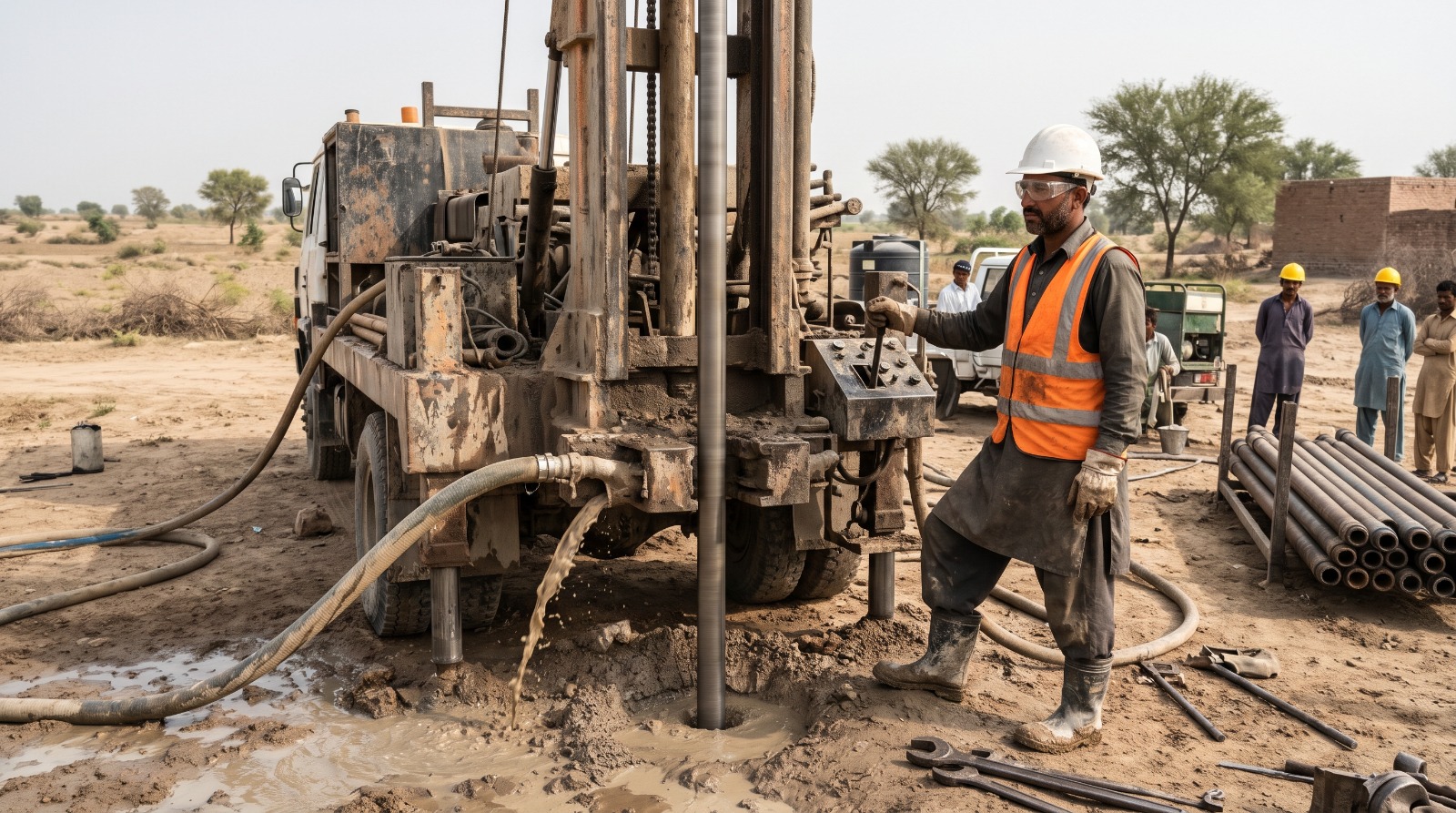
Water Well Driller
A Water Well Driller operates drilling machines and equipment to create wells that access underground water for homes, agriculture, industries, and communities. They select drilling methods, inspect geological conditions, install well casings, and ensure that wells are constructed safely and efficiently.
- Inspect drilling sites and review available geological information.
- Prepare drilling equipment, tools, and machinery.
- Operate drilling rigs to bore into the ground.
- Monitor drilling depth, soil conditions, and rock formations.
- Install well casings, screens, and related components.
- Coordinate water testing and well development activities.
- Maintain drilling equipment and perform routine inspections.
- Follow workplace safety procedures and environmental regulations.
- Record drilling depths, geological observations, and construction details.
- Coordinate with engineers, technicians, landowners, and water supply teams.
Drilling Operations
- Drilling methods, rig components, and drilling tools.
- Borehole construction, drilling depth, and drilling fluids.
- Soil, rock, and geological formation characteristics.
Groundwater and Well Construction
- Groundwater occurrence and aquifer characteristics.
- Well casing, screens, pumps, and borehole development.
- Basic groundwater testing and water yield assessment.
Safety and Environmental Protection
- Safe operation of drilling machinery.
- Groundwater contamination prevention.
- Site safety, waste handling, and environmental requirements.
Drilling Equipment Operation
- Operate drilling rigs according to approved procedures.
- Adjust drilling equipment to suit ground conditions.
- Monitor drilling progress and equipment performance.
Well Construction and Maintenance
- Assist with installing casings and well screens.
- Inspect drilling tools and identify equipment faults.
- Support well development and pump installation activities.
Site Management and Documentation
- Read site plans and basic drilling specifications.
- Record borehole depth, materials, and drilling progress.
- Coordinate with crew members and supervisors.
Mechanical Ability
- Understand how drilling machinery and mechanical systems work.
- Recognize equipment problems and unusual operating conditions.
- Perform routine maintenance and basic troubleshooting.
Physical and Practical Ability
- Work outdoors in different weather conditions.
- Handle tools and equipment safely.
- Maintain concentration during long drilling operations.
Technical and Problem-Solving Ability
- Respond to changes in soil and rock formations.
- Follow drilling instructions and technical measurements.
- Identify potential safety hazards and take appropriate action.
Water Well Drillers are practical, safety-conscious, hardworking, and mechanically inclined. They do well at jobs that need:
Mechanical Aptitude
Attention to Safety
Physical Stamina
Problem-Solving
Teamwork
Reliability
Drilling Machinery
- Rotary and percussion drilling rigs.
- Drill rods, drill bits, pumps, and drilling fluid systems.
- Rig control panels and depth measurement equipment.
Groundwater Assessment Tools
- Groundwater level meters.
- Water sampling and basic testing equipment.
- Geological logs and borehole measurement tools.
Maintenance and Safety Equipment
- Wrenches, gauges, and mechanical maintenance tools.
- Personal protective equipment, including helmets, gloves, and safety boots.
- Equipment inspection and maintenance record systems.
- Complete Matric or an equivalent qualification; some entry-level positions accept lower formal education with relevant experience.
- Obtain vocational training in drilling operations, mechanical technology, or a related technical trade.
- Learn the safe operation of drilling rigs and associated equipment.
- Understand basic geology, groundwater, and well construction.
- Develop practical skills through supervised field training or apprenticeship.
- Learn equipment inspection, routine maintenance, and troubleshooting.
- Follow occupational safety and environmental protection procedures.
- Develop teamwork, communication, and recordkeeping skills.
- Obtain any required operator training, certification, or site-specific authorization.
Water Well Drillers support groundwater access for agriculture, rural communities, housing, industry, and water supply projects in Pakistan. Opportunities may arise through drilling contractors, construction companies, agricultural service providers, water supply projects, and groundwater development programs.
- Private water well drilling companies.
- Groundwater development and water supply contractors.
- Agricultural irrigation and tube-well installation businesses.
- Construction and infrastructure companies.
- Rural water supply and community development projects.
- Industrial and commercial water supply projects.
- Government water management and irrigation projects.
- Mining and geotechnical drilling contractors, with additional training.
- Environmental and groundwater investigation firms.
- Non-governmental organizations working on water access.
- Independent drilling and well maintenance businesses.
- Matric or equivalent qualification.
- Technical certificate in drilling operations or mechanical trades.
- Diploma of Associate Engineering (DAE) in Mechanical, Civil, or a related discipline for relevant technical pathways.
- Practical training in drilling rig operation and maintenance.
- Basic geology, groundwater, and borehole construction training.
- Training in well casing, screens, pumps, and water testing.
- Occupational safety and equipment handling certification where required.
- Apprenticeship or supervised field experience with a drilling contractor.
- National Vocational and Technical Training Commission (NAVTTC): Check for relevant vocational and technical training programs.
- Punjab TEVTA: Technical and vocational institutes offering mechanical and related trades.
- Khyber Pakhtunkhwa TEVTA: Explore relevant technical training options.
- Sindh TEVTA: Technical training programs in mechanical and industrial trades.
- Government Colleges of Technology: DAE programs in Mechanical or Civil Technology, depending on campus offerings.
- Technical training centers and private institutes: Ask about drilling machinery, mechanical maintenance, and equipment operation courses.
- Water well drilling contractors: Some employers provide supervised on-the-job training and apprenticeships.
- Basic vocational course: approximately PKR 10,000 to 40,000.
- Specialized mechanical or equipment operation training: approximately PKR 15,000 to 60,000.
- DAE in Mechanical or Civil Technology at a public institute: approximately PKR 30,000 to 150,000 per year.
- Private technical diploma: approximately PKR 50,000 to 200,000 per year.
- Occupational safety training: approximately PKR 5,000 to 25,000.
- Basic tools and protective equipment: approximately PKR 10,000 to 40,000.
- Specialized drilling training: approximately PKR 20,000 to 80,000, where offered.
- Field travel and training expenses: approximately PKR 5,000 to 30,000.
- Scholarships and financial assistance: eligible trainees may access subsidized vocational courses, stipends, or financial support through NAVTTC, provincial TEVTAs, and other government training schemes.